
What to Expect at Your First Hawaii Luau
Your first Hawaii luau is part dinner, part cultural celebration and part live show, all wrapped into one relaxed island evening. Every venue has its own setting and style, but most follow a similar rhythm: you arrive, receive a welcome, explore the grounds, enjoy dinner and settle in for music, storytelling, hula and Polynesian entertainment.
Arriving and Checking In
Plan to arrive with enough time to check in, find your assigned table or seating area and take a few photos before the evening begins. The light is often especially beautiful before sunset, and arriving early lets you enjoy the surroundings without rushing straight to dinner.
The Lei Greeting
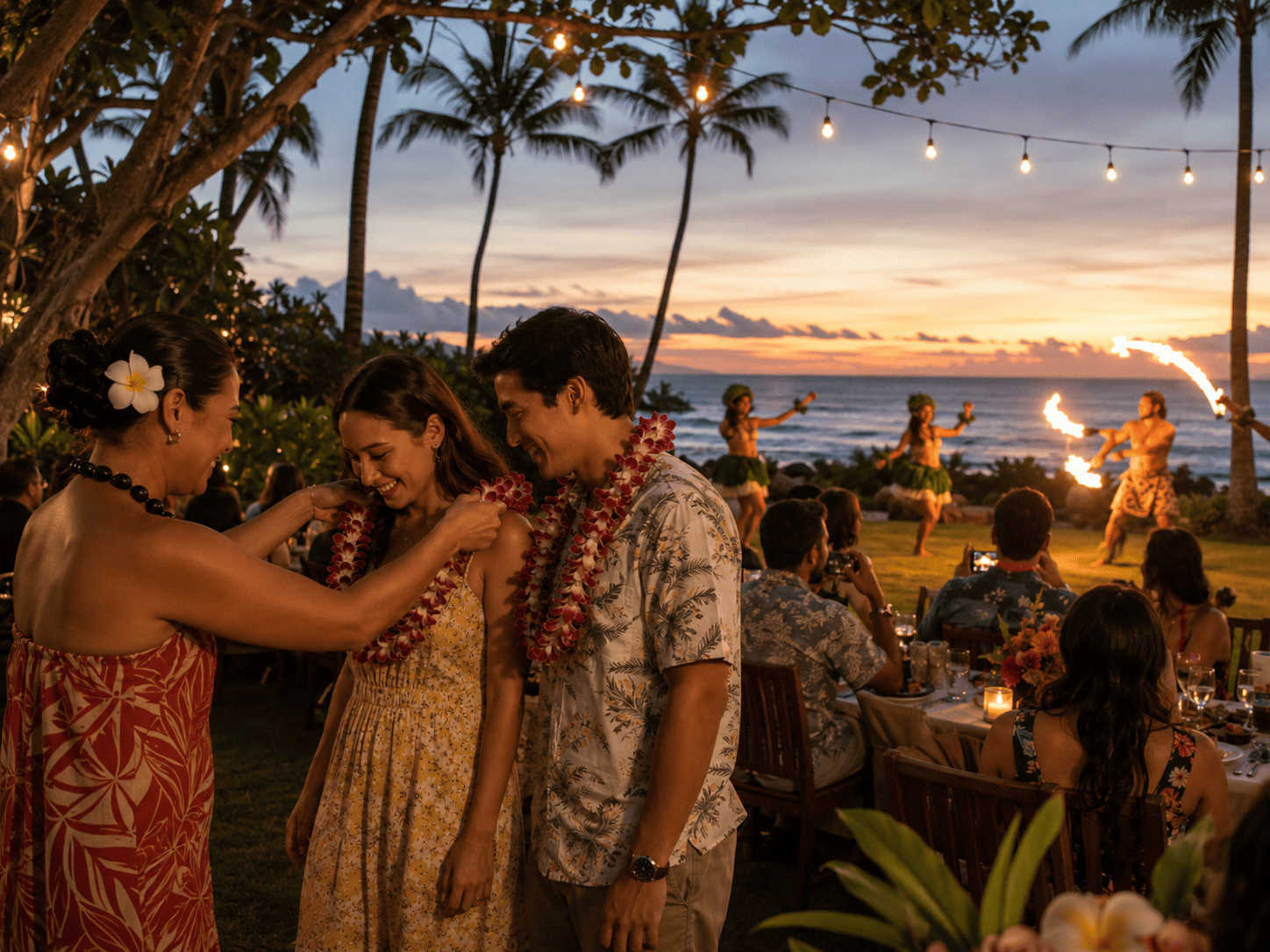
Many luaus welcome guests with a shell, kukui nut or fresh flower lei, depending on the package you choose. It is a simple but memorable start to the evening and often one of the nicest times to take a family or couple's photo.
Cultural Activities Before Dinner
Before the main show, you may find cultural demonstrations and activities taking place around the venue. Depending on the luau, these can include hula lessons, coconut husking, ukulele music, temporary Polynesian tattoos, traditional games or weaving demonstrations.
The activities vary, so review the current program if this part of the evening matters to you. Aloha Kai Luau pairs cultural activities with the scenery of Makapuu, while Smith's Tropical Paradise Luau and Luau Kalamaku give you time to enjoy their garden and plantation settings before the show.
The Imu Ceremony
Some luaus include an imu ceremony, where guests learn how kalua pork is traditionally cooked in an underground oven. The ceremony may include an explanation of how the meat is prepared, wrapped and slowly roasted beneath heated stones. Not every luau offers this part of the experience, so check the description before booking if you would especially like to see it.
Luau Dinner and Drinks
Dinner may be served buffet-style, family-style or as a plated meal. Menus often include kalua pork, chicken, fish, rice, poi, lomi salmon, salads, tropical fruit and island-inspired desserts, along with more familiar choices for guests who prefer simpler foods.
Drink policies differ from one venue to another. Some packages include an open bar, while others provide a limited number of drink tickets or offer additional cocktails for purchase. If anyone in your group has food allergies or dietary restrictions, review the menu and contact the luau before your visit.
Hula, Music and Hawaiian Stories
As the entertainment begins, you can expect Hawaiian music, hula and stories connected to the islands. Live musicians may play ukulele, guitar and percussion while dancers share stories of the land, ocean, love, travel and family through movement and chant.
Some Hawaii luaus place a strong emphasis on Hawaiian history and hula, while others take the audience on a wider journey through Polynesia. Reading the show description can help you choose the cultural focus that interests you most.
A Journey Across Polynesia
Many productions continue beyond Hawaii with dances and music from Tahiti, Samoa, Tonga and New Zealand. The pace often becomes more energetic as the evening moves along, with faster drums, bold costumes and larger group numbers.
Large productions may use dramatic lighting, detailed sets and a theatrical storyline, while smaller luaus can feel more personal and conversational. On Maui, you can compare the different styles offered by Royal Lahaina Luau, Wailele Luau, The Luau at Grand Wailea and Old Lahaina Luau.
The Fire-Knife Performance
Many luaus end with a Samoan fire-knife performance, bringing the evening to an energetic close with spinning flames, fast movement and powerful drumming. It is often one of the most anticipated parts of the show, especially for children and first-time visitors.
Fire-knife dancing is not included at every luau, particularly shows focused entirely on Hawaiian traditions, so check the entertainment details if seeing it is important to you.
How Long Does a Luau Last?
Most Hawaii luaus last about two and a half to four hours from check-in through the end of the performance. Transportation can add considerably more time, especially when a shuttle makes several hotel pickups or the venue is on another part of the island.
Families with young children may prefer an earlier show or a luau near their hotel. If you are traveling to the North Shore, east side or west coast of Oahu, plan the return trip before the evening begins so you are not figuring it out after the finale.
How the Experience Varies by Island
On Oahu, you can choose the convenience of Waikiki at Pa'Ina Waikiki Luau or Rock-A-Hula Cabana, the coastal scenery of Aloha Kai Luau, the North Shore setting of Toa Luau or the beachside atmosphere of Germaine's Luau.
Maui luaus are known for oceanfront resort settings and sunset views. Kauai offers the plantation production of Luau Kalamaku and the lush gardens of Smith's Tropical Paradise Luau. On the Big Island, you can enjoy the Kailua-Kona waterfront at Island Breeze Luau or the oceanfront resort setting of Royal Kona Luau.
A Few Things to Know Before You Go
Dress in comfortable island-casual clothing and bring a light layer in case the evening turns breezy. Confirm your check-in time, parking or transportation arrangements, package inclusions and the venue's weather policy before leaving your hotel.
Once you arrive, give yourself time to enjoy each part of the evening. The lei greeting, music before dinner, conversations around the table and quiet moments between dances often become just as memorable as the fire-knife finale.